What to open with what you're cooking
The sauce and the cooking usually decide the wine more than the meat does. Find your dinner below, open the bottle, and get on with eating.
Tomato sauce
Spaghetti bolognese, pizza, lasagne, meatballs, anything with passata.
- Open
- Chianti (Sangiovese), Barbera, or a Montepulciano d'Abruzzo.
- Why
- Tomato is sour. A wine with less acidity than the sauce tastes flat and flabby next to it, and Italian reds are made to keep up.
- Plan B
- Any red that tastes fresh rather than jammy, or a dry rosé. Skip big oaky reds; the tomato makes them taste bitter.
Cream, butter, cheese sauce
Carbonara, chicken in a creamy sauce, fish with butter, risotto, gratins.
- Open
- Chardonnay: an oaked one for cream sauces, Chablis for buttery fish. Chenin Blanc works for both.
- Why
- A rich sauce wants a wine with some weight, and enough acidity to stop the second plate from feeling heavy.
- Plan B
- A dry sparkling wine. The bubbles and acidity cut through cream better than almost anything else in the cupboard.
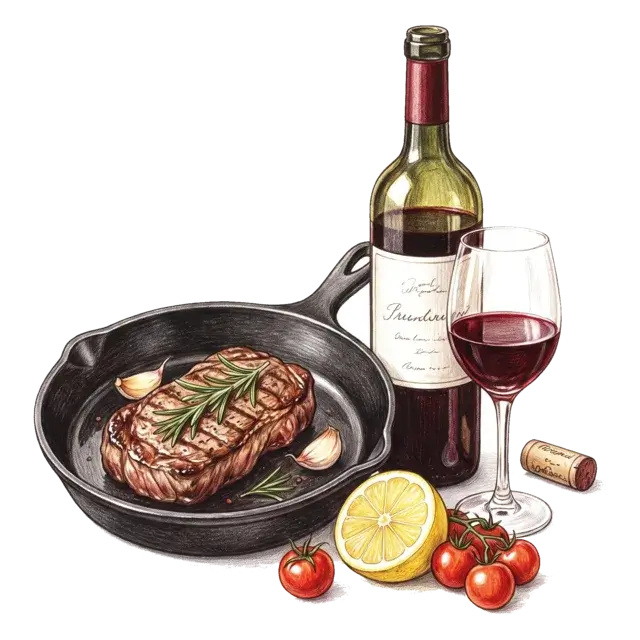
Steak, lamb, a stew
Steak, roast or slow-cooked lamb, beef stew, burgers, ribs.
- Open
- Bordeaux or Cabernet Sauvignon for steak and stew, Rioja for lamb, Malbec or Primitivo for burgers and anything off the barbecue.
- Why
- Tannin, the drying grip in a red, binds to protein and fat. With meat it softens; without it, it just dries your mouth.
- Plan B
- The fullest red you have. This is the one dinner where a white really struggles.
Roast chicken, pork, mushrooms
Roast chicken, pork chops, duck, turkey, anything with mushrooms.
- Open
- Pinot Noir or Beaujolais. Duck can take a Pinot with a bit more depth.
- Why
- These are middle-weight dinners. A light red or a full white matches them without taking over, and Pinot's earthiness loves mushrooms.
- Plan B
- Almost anything that isn't very heavy or very sweet: a full white, a dry rosé, a light Italian red.
Fish and seafood
Grilled or fried white fish, fish and chips, mussels, prawns, oysters, sushi. Salmon and tuna are the exceptions.
- Open
- Albariño, Sauvignon Blanc, Muscadet or Grüner Veltliner. Champagne or Cava with anything fried or raw.
- Why
- A crisp white does the job of the squeeze of lemon. Bubbles scrub the salt and oil of fried food off your tongue.
- Plan B
- Any dry, unoaked white. Salmon and tuna are meaty enough for Pinot Noir or a dry rosé, if that's what you have.
Curry, chilli and spicy food
Thai and Indian curries, pad thai, Korean fried chicken, tacos, chilli con carne.
- Open
- Off-dry Riesling (a German Kabinett) or Gewürztraminer. For tacos and chilli con carne, a soft fruity red: Beaujolais, Primitivo or Zinfandel.
- Why
- Alcohol and tannin make chilli hotter. A touch of sweetness and plenty of fruit cool it down.
- Plan B
- A cold dry rosé, or the lowest-alcohol white you have. Leave the big reds for another night.
Vegetables and pulses
Mushroom stroganoff, lentil dal, roasted roots, pesto, goat cheese salad, falafel.
- Open
- Earthy and rich (mushrooms, lentils, roasted roots): Pinot Noir or a Côtes du Rhône. Green and fresh (herbs, pesto, goat cheese): Sauvignon Blanc or Grüner Veltliner.
- Why
- Without meat, the sauce and the seasoning are the dinner. Match brown flavours with a soft red, green flavours with a crisp white.
- Plan B
- A Chenin Blanc covers most vegetable dinners, earthy and green alike. With spiced dishes like dal, go back to chilli and spice.
Cheese
A cheese board, blue cheese, aged cheddar, brie.
- Open
- Soft cheese: Champagne or a crisp white. Blue: Sauternes or Port. Hard and aged: Nebbiolo, Rioja, or a dry fino sherry.
- Why
- Most cheese wants acidity or sweetness more than tannin. Salty blue cheese and a sweet wine is one of the few pairings that is better than both on their own.
- Plan B
- Whatever white you opened for dinner. A big red is usually the worst choice on the board.
Dessert
Chocolate cake, apple pie, crème brûlée, fruit tarts.
- Open
- Chocolate: Port or another sweet red. Fruit, custard and caramel: Sauternes or a late-harvest white.
- Why
- The wine has to be at least as sweet as the dessert. Next to sugar, a dry wine tastes sour and thin.
- Plan B
- If there's nothing sweet in the house, finish the dinner wine with the cheese and have coffee with the dessert.
When nothing fits
Three bottles get you through most dinners that don't fit anywhere above:
- A dry sparkling wine. Fried, salty, creamy, raw, cheesy: it rarely gets it wrong.
- A dry rosé. Halfway between a white and a red, so it covers the dinners that are halfway too.
- A light, fresh red like Beaujolais or Pinot Noir. Serve it a little cool.
CruSense does this with the bottles you already own: type what you're cooking, and your own wines come back ranked, each with a plain reason. See how it works.