Build a cellar for the way you cook
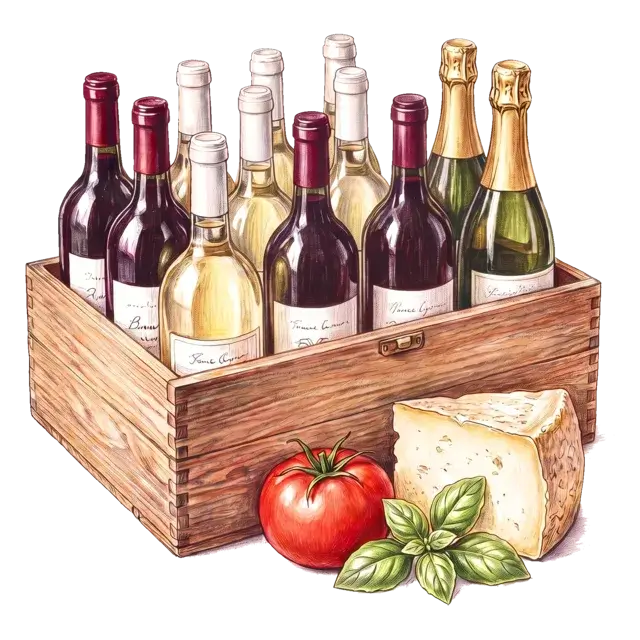
A home cellar can start with one case of twelve bottles, chosen for the dinners you already cook. Tap your dinners in the planner below and it builds the case as you go: the twelve wines to buy, how each one tastes, and which dinner it’s for.
What do you cook?
Tap the dinners you cook most. A typical mix of dinners is already picked; tap any dinner to add or remove it. The wines are chosen by Ask Cru, the AI sommelier in the CruSense app.
Why these twelve
Every bottle is there for one of your dinners. Where one wine suits two of them, like Chianti with both pasta and pizza, the case uses that wine for both, so twelve bottles go further.
Two bottles are always dry sparkling. Sparkling wine goes with more food than any other wine, and with no food at all.
No wine takes more than two bottles, so whatever you’re cooking, you have a choice.
Buying the case
Copy the list and take it to a wine shop, or a supermarket with a good wine aisle. Each line says how the wine tastes and what to look for on the label. If that exact name isn’t on the shelf, ask for the taste: “a crisp, dry white” or “a light red” gets you something close.
Grow and refine your collection
The first twelve bottles give every dinner you picked a good match, but one wine has to cover a whole kind of dinner: the same Bordeaux goes with the steak, the stew and the burgers.
Each case after that should make the matches better, not just bigger. Instead of more of the same, add a wine for a single dish you cook often: a Bordeaux Supérieur for the steak, a Côtes du Rhône Villages for the stew, a Zinfandel for the burgers. The band under your case, “Grow and refine your collection”, suggests wines like these for the dinners you picked.
When you restock, buy again the wines you finished first, because those suit your cooking best. Then add two or three new wines, each for a dish, plus one for something you cook now and then, like a cheese board or a dessert. After three cases, 36 bottles, most dishes you cook have a wine of their own.
How to store wine at home, no cellar needed
You don’t need a cellar room or a wine fridge. Everyday wines like these are made to be enjoyed young, within a year or two, so a cupboard is enough, away from the oven, radiators and sunlight. Lay bottles with corks on their side so the cork stays wet.
A wine fridge is worth buying only if your home is warm all year, or you start keeping bottles for years. Which wines are worth keeping, and for how long, is in Drink now, or keep for later? For serving temperatures and how long an open bottle lasts, see How cold to serve wine, and how long an open bottle keeps.
Not sure which of the twelve to open tonight? What to open with what you're cooking sorts it by what’s in the pan.
CruSense keeps the cellar for you: scan or paste each bottle in as you buy it, and the next time you're cooking, type the dish and your own bottles come back ranked. See how CruSense works.