Drink now, or keep for later?
Every bottle has a stretch of years when it tastes its best. Most wine is already there the day you buy it, and only a few kinds get better with waiting. This guide shows how long each kind stays at its best, counted from the year on the label, so you open every bottle while it’s good.
How long wine keeps unopened
Years after the year on the label, which is the vintage: the year the grapes were picked.
| Wine | At its best | Good until |
|---|---|---|
| Rosé | Up to 1 year | 3 years |
| Prosecco | Up to 2 years | 3 years |
| Champagne with no yearNon-vintage (NV), also Cava and Crémant; years from buying | Up to 2 years | 3 years |
| Vintage ChampagneA year on the label | 5–15 years | 20 years |
| Crisp whiteSauvignon Blanc, Albariño, Pinot Grigio | 1–3 years | 5 years |
| Fuller whiteChardonnay, Chenin Blanc, Pinot Gris | 2–6 years | 10 years |
| Riesling | 3–12 years | 20 years |
| Light redPinot Noir, Beaujolais, Barbera | 2–6 years | 10 years |
| Medium redChianti, Rioja, Merlot | 4–10 years | 15 years |
| Firm redCabernet Sauvignon, Syrah, Nebbiolo | 6–15 years | 20 years |
| Port, Sauternes, sweet wine | 5–20 years | 30 years |
- No year?
- Most Champagne carries no year: it’s a blend of several harvests, made to be ready when you buy it. Its clock starts on the shop shelf, so open it within a couple of years of buying. A vintage Champagne, from a single good year, is the one to keep.
- Everyday wine
- The table is for a decent bottle. The cheapest wines of any colour are made to drink within a year or two of buying, and waiting doesn’t improve them.
- Why
- Fresh fruit fades first. Tannin, acidity and sugar are what hold a wine together over the years, which is why firm reds, Riesling and sweet wines keep longest.
How to tell if wine has gone bad
- Before opening
- A cork pushed up out of the neck, or wine seeping past the cork, means the bottle once got too warm. A white that has turned deep gold or brown is usually tired.
- In the glass
- A wine past its best smells of sherry, stewed fruit or wet cardboard, and tastes flat, with the fruit gone. A red turns brick-orange at the edge of the glass.
- Not age
- A musty smell, like a damp cellar, is a faulty cork, not age. Any bottle can have one, and most shops take the bottle back.
- Still useful
- A tired wine is harmless. If the wine tastes flat but smells clean, use it in a sauce or a stew.
Which bottle to open first
- Short-lived first
- Rosé, Prosecco and crisp whites don’t improve, so open those before the others.
- Then by year
- Among the everyday reds and whites, open the bottle with the oldest year on the label first.
- Keep for later
- Riesling, firm reds and Port are the bottles to save for a special evening. A few more years only makes them better.
For how long an opened bottle stays good, see How cold to serve wine, and how long an open bottle keeps.
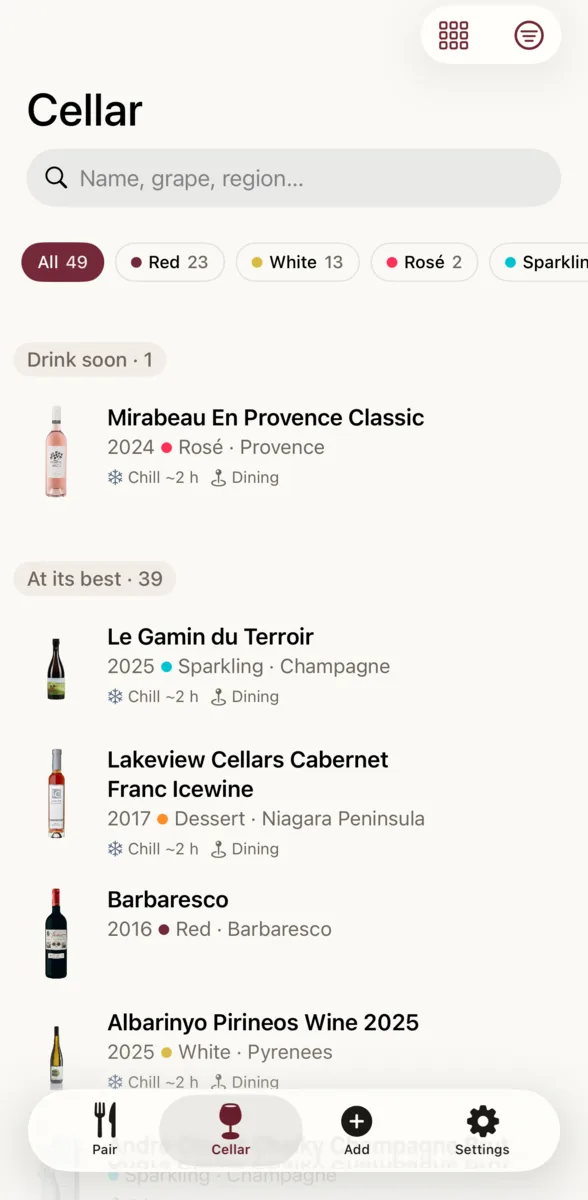
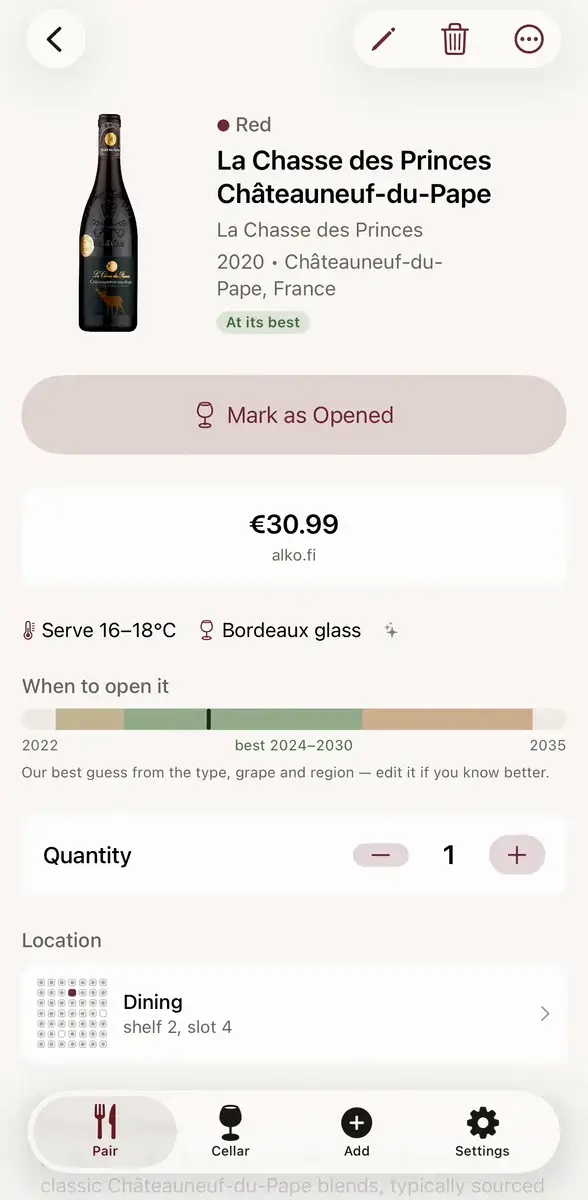
CruSense estimates this for every bottle you add, from its type, grape, region and year, and sorts your cellar into Wait, Almost ready, At its best, Drink soon and Past its best. Each estimate is a best guess, and you can change it. See how CruSense works.